Attic airflow
Roof Ventilation & Attic Airflow in the Carolinas
Roof ventilation lets hot, moist air escape your attic and draws cooler, drier air in, which protects your roof from heat and moisture damage, helps prevent mold and rot, and can lower your cooling costs. BCI evaluates your attic airflow and installs balanced intake and exhaust ventilation as part of a healthy roof system. Your Roof, Our Responsibility.
Why it matters
Why ventilation matters in the Carolina climate
Our long, hot, humid summers are hard on attics. Without good airflow, an attic traps heat and moisture, and that causes real problems:
Shorter roof life.
Trapped heat bakes your shingles and decking from below, aging the roof faster.
Moisture damage.
Humid air with nowhere to go leads to condensation, mold, mildew, and rotting decking.
Higher energy bills.
A superheated attic makes your air conditioning work harder.
Ice and moisture issues.
Even in our milder winters, poor ventilation can cause moisture problems.
Good ventilation solves all of that quietly, in the background, for the life of your roof.
How it works
How balanced ventilation works
Effective ventilation is about balance: intake vents low on the roof (usually at the soffits) let cool air in, and exhaust vents high on the roof (at or near the ridge) let hot air out. When intake and exhaust are balanced, air moves continuously through the attic on its own. We assess what your roof has, identify what is missing, and install the right combination:
- Ridge vents
- Soffit and intake vents
- Other exhaust vents as needed for your roof design
New roofs
Ventilation and your new roof
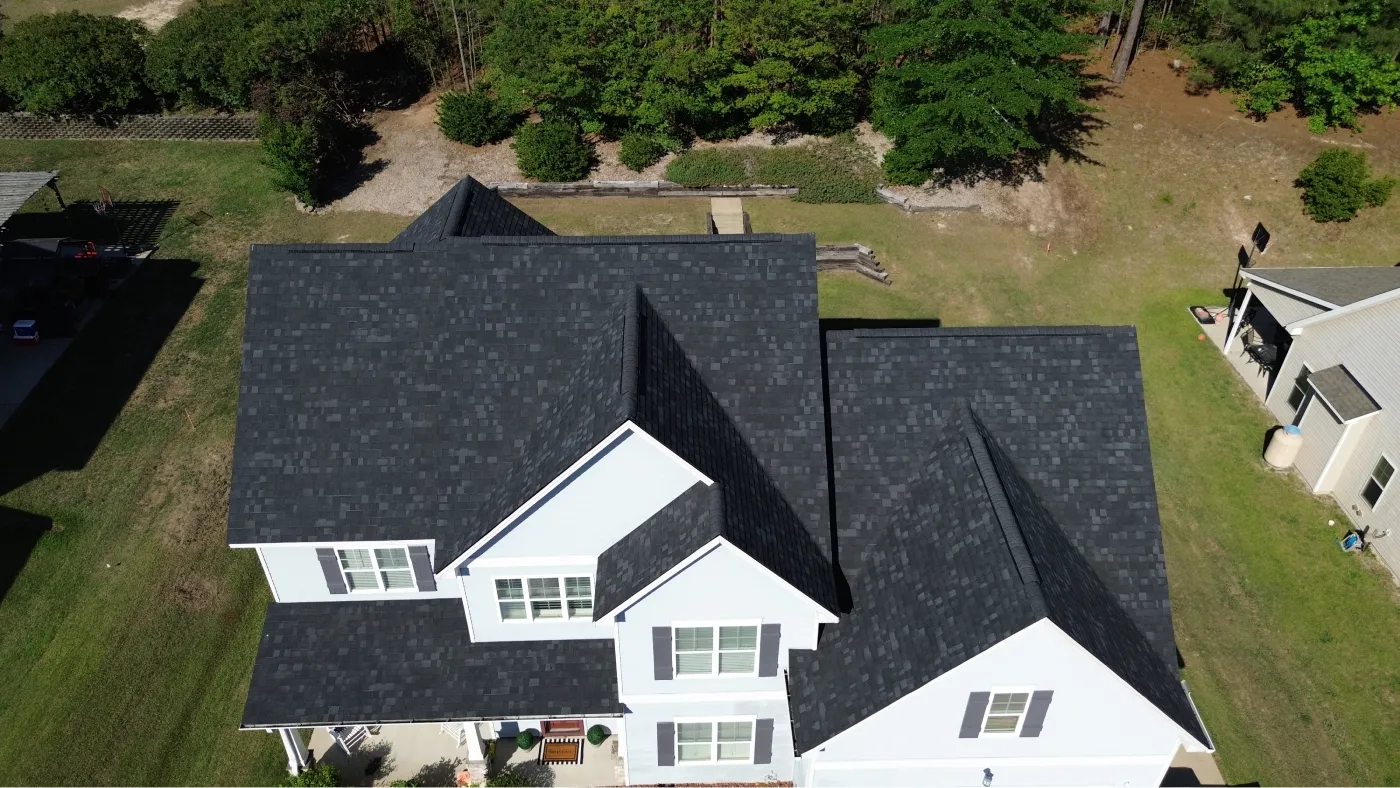
The best time to get ventilation right is when you install or replace your roof. We build proper airflow into every roof system we install, so your new roof reaches its full lifespan and your home stays more comfortable.
FAQ
Frequently asked questions
Why is attic ventilation important?
It lets heat and moisture escape your attic, which protects your roof from premature aging, prevents mold and rot, and can lower your cooling costs. It is essential for a healthy, long-lasting roof.
What are the signs of poor roof ventilation?
A very hot attic, high summer cooling bills, moisture or mildew in the attic, and shingles that are aging faster than they should can all point to inadequate ventilation.
Can you add ventilation to my existing roof?
Yes. We can assess your current airflow and add intake or exhaust ventilation to bring it into balance, even without a full roof replacement.
Does ventilation really lower energy bills?
By reducing the heat trapped in your attic, good ventilation eases the load on your air conditioning, which can help lower cooling costs during our long Carolina summers.
Roofing services